
How we test gold and silver: PMV, XRF and Veriscan explained
Every bar and coin we sell is tested before it goes out of our shop at Centrium Square. We use three checks: a Precious Metal Verifier (PMV), XRF analysis, and Veriscan on PAMP bars. Each one looks at something different, and between them they cover each other's blind spots. Below is what each test does, and why we don't take the packaging at its word.
- •A PMV reads the metal below the surface, often through its packaging.
- •XRF shows what the metal is made of, element by element, at the surface.
- •Veriscan matches a PAMP bar to the record PAMP made of it at the refinery.
- •A sealed card is a good sign but can be copied; testing is what confirms the metal.
Why bullion needs testing at all
Gold and silver are valuable and easy to resell, so people fake them. The fakes worth worrying about are not crude brass lumps. They are well-made bars with the right logo, a believable serial number and a convincing assay card, sometimes hiding a tungsten core, because tungsten is almost exactly as dense as gold.
A fake like that passes most of what people try at home. The weight is about right. A magnet does nothing. Under the shop lights it looks clean. So proper testing has to measure the metal itself, not its appearance.
PMV testing: checking beneath the surface
A Precious Metal Verifier measures how well a piece of metal conducts electricity. Each metal has its own reading: fine gold sits in one place, fine silver in another, and tungsten, copper or lead somewhere else again. The device compares what it measures with the expected value for the metal the piece claims to be.
What makes it useful is that the reading goes below the surface, into the body of the bar or coin. How deep depends on the sensor and the metal, but it is enough to catch a gold-plated base metal or a thick coating over a cheaper core. Nothing is scratched or marked, and the PMV can often read through a plastic capsule or a sealed card, so a genuine piece stays in its original packaging.
At the counter it looks almost too simple. Staff pick the metal setting and a sensor that suits the size of the piece, place it on the sensor and check where the result falls on the scale. A genuine 999.9 gold bar reads within the band for fine gold. If it doesn't, the piece is set aside for a closer look.
XRF analysis: what the metal is made of
XRF stands for X-ray fluorescence. The analyser points X-rays at the metal, and each element in it sends back energy at its own characteristic level. The machine reads those signals and reports the composition, element by element, as percentages.
This fills in what the PMV can't tell us. If a bar is stamped 999.9 but the metal carries silver or copper, XRF shows the mix. It is how we confirm that a coin sold as 999.9 isn't really 22 karat, or that a silver bar is genuinely 999 fine.
XRF has its own limit. It reads the outer layer of the metal, not the core, so a well-plated fake could in principle give a good surface result. That is why it never works alone here. The PMV looks beneath the surface, XRF tells us the composition, and a piece has to pass both.
Veriscan on PAMP bars: matching a bar to its refinery record
Veriscan is a system from PAMP, the Swiss refiner. When a bar is made, PAMP records the fine surface detail of its face, which is unique to that bar, much like a fingerprint. Scanning the bar later with the Veriscan app compares it with that stored record.
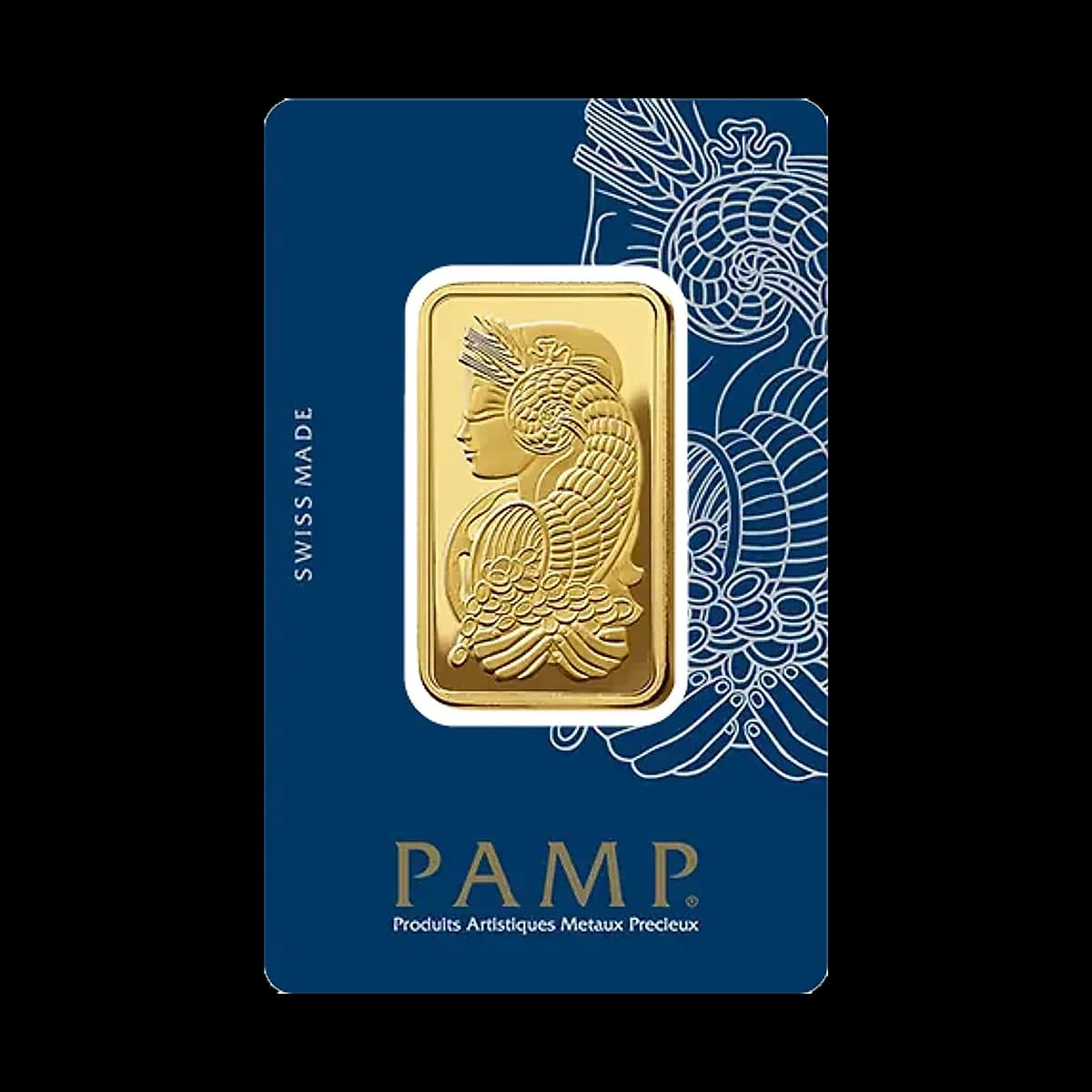
This answers a different question. PMV and XRF tell us the metal is genuine gold. Veriscan tells us this is the actual bar PAMP produced, which helps against counterfeits that copy the Lady Fortuna design closely. We run it on PAMP bars as an extra layer on top of the metal tests, never in place of them.
Why a sealed assay card is not proof on its own
Plenty of customers assume that a bar still sealed in its card, with a serial number and a signature, must be real. From a reputable refiner the card is a good sign, but it is printed packaging. Counterfeiters copy cards, holograms and serial numbers along with the bars, and some fakes come in packaging that looks sharper than the genuine article.
Seals can be opened and redone. A genuine card can be reused around a fake bar. A serial number that matches the card only proves the two were printed to match, and says nothing about the metal inside.
None of this means you should cut open a sealed bar. Opening the card can make resale less convenient. The point is that the card should be backed by a test of the metal, which the PMV can usually do with the card left on.
When a piece reaches you, a few things are still worth checking yourself:
- The refiner's name, weight, fineness and serial number are clearly stamped on the bar and match the card.
- The printing on the card is crisp, with no blurred text or spelling mistakes.
- The weight on an accurate scale matches the stated weight.
- The size and thickness look right for that refiner's standard bar.
- The seal is intact, with no lifting edges or glue marks.
Why buying from a dealer who tests matters
Testing only helps if it happens before you pay. When the dealer tests every piece before sale, you are not the one who discovers a problem years later at the selling counter. A registered dealer also means a real business with an address and records behind the sale. Our PSPM Act registration number with the Ministry of Law, PS20260001016, is on our About page and in the footer of the site.
Sourcing counts as well. We are an authorised StoneX supplier, other dealers in Singapore buy wholesale from us, and our stock comes from refiners and mints such as PAMP, Perth Mint and Valcambi. We test every piece anyway. Good sourcing lowers the risk; testing is how you confirm it.
The same checks apply when you sell to us. Your gold or silver is tested at the counter, and the final amount is set after testing, at that moment's price. Bringing your original receipt and packaging helps, but the test result is what counts.
Questions people ask
Will testing damage my gold or silver?
No. PMV, XRF and Veriscan are all non-destructive, so nothing is scratched or cut. The piece goes back to you in the same condition it arrived.
Do I have to open the sealed card for you to test my bar?
Usually not. The PMV can often read through a card or capsule, so sealed bars can stay sealed. If a reading isn't clear, we will tell you before anything else is done.
Can I test gold at home with a magnet?
A magnet catches some cheap fakes, since gold and silver aren't magnetic. Tungsten and many other base metals aren't magnetic either, so treat it as a rough first check, not proof.
Can you test a bar I bought somewhere else?
If you are selling it to us, yes: every piece we buy back is tested at the counter first. Bring the bar, and the receipt and original packaging if you still have them.
You can check live prices at bullionking.sg/market and browse our tested stock at bullionking.sg/shop. If you would like to ask about the checks in person, walk in to Centrium Square during opening hours, no appointment needed, or message us on WhatsApp at +65 8088 4858.
General information, not financial, tax or legal advice. For the official rules see IRAS and the Ministry of Law.
Popular bullion at today's prices
 Pre-order