
Gold jewellery and gold bullion are not the same
A 916 bangle and a 999.9 gold bar are both gold, but they are priced, taxed and valued in quite different ways. We get asked about this most weeks at the counter, often by someone with a piece of family jewellery in one hand and a bar receipt in the other. The differences come down to four things: making charges, purity, GST and how each is valued when sold.
- •Jewellery prices include a making charge for craftsmanship that a gold buyer will not pay back.
- •Much Singapore jewellery is 916 (91.6% gold), while investment bars are usually 999.9.
- •Jewellery bought from a GST-registered seller carries 9% GST; qualifying investment gold bars and coins are exempt.
- •When sold, gold is valued by weight and purity after testing, which is simpler with a marked bar than with jewellery.
What a making charge is and why bullion barely has one
When you buy a gold necklace or bangle, the price covers the gold and the work of turning it into jewellery. That second part is usually called the making charge or workmanship fee. It pays for design, casting, hand-finishing, polishing, any stone setting and the shop's overheads. Fine chains and detailed dragon-and-phoenix pieces tend to carry more of it.
Bullion has a premium too, but it works differently. Bars and coins are made in large runs to a standard shape, so the production cost per gram is small by comparison. Our premium over the live spot price is shown openly on every product page, so you can see what you pay above the metal. See live prices on our site for the current figures.
Here is what matters later on. When you sell gold back, the buyer is paying for the metal. The making charge on jewellery goes on craftsmanship you enjoy while you wear the piece, not on anything a gold buyer will pay you for.
Purity: 916 jewellery versus 999.9 bullion
A lot of traditional gold jewellery in Singapore is 22 karat, stamped 916. That means 91.6% of the weight is pure gold. The rest is other metals, often silver, copper or zinc, added to make the piece harder so it scratches and bends less. You will also see 18 karat (750), and 24 karat pieces, which are soft and dent easily.
Investment bars are usually 999.9, often called four nines fine, and so are many bullion coins. A 10 g bar of 999.9 gold holds very nearly 10 g of pure gold. A 10 g bangle stamped 916 holds about 9.16 g. A couple of well-known coins are exceptions: the American Gold Eagle and the Krugerrand are 22 karat, but they are made slightly heavier so each still contains a full troy ounce of pure gold.
Jewellery has one more complication. Clasps, solder joints and fittings are not always the same purity as the main body, and stamps on older or overseas pieces are not always right. That is why any gold buyer tests before paying.
GST: why jewellery carries it and investment gold does not
Since 1 October 2012, investment precious metals, or IPM, have been exempt from GST in Singapore. Jewellery is not IPM. Buy a gold ring or chain from a GST-registered retailer and 9% GST applies to the whole price, gold and making charge included.
For gold to count as IPM, it must be at least 99.5% pure and come as bars, ingots, wafers or coins. Bars and wafers must be from a refiner accredited by a recognised market body such as the LBMA, and carry the refiner's mark, fineness and weight. Coins must be legal tender in their country of issue and meet IRAS's other conditions. For silver the line is 99.9%, for platinum 99%.
So a 916 bangle can never qualify, however much gold is in it. Neither can a 999.9 pendant, because jewellery is excluded by its form, whatever the purity. IRAS's e-Tax guide on investment precious metals has the full conditions.
- Gold jewellery of any purity: GST applies when bought from a GST-registered seller
- Gold bars and wafers at 99.5% or above, from an accredited refiner and properly marked: GST-exempt
- Gold coins at 99.5% or above that are legal tender and meet IRAS's conditions: GST-exempt
- Gold below 99.5%, in any form, including 22 karat coins: not IPM
How gold is valued when you sell it back
A gold buyer looks at two things: weight and purity. Multiply them and you get the pure gold content, which is priced against the live gold price at that moment. The design, the name of the jewellery shop and the original receipt do not change how much gold is there.
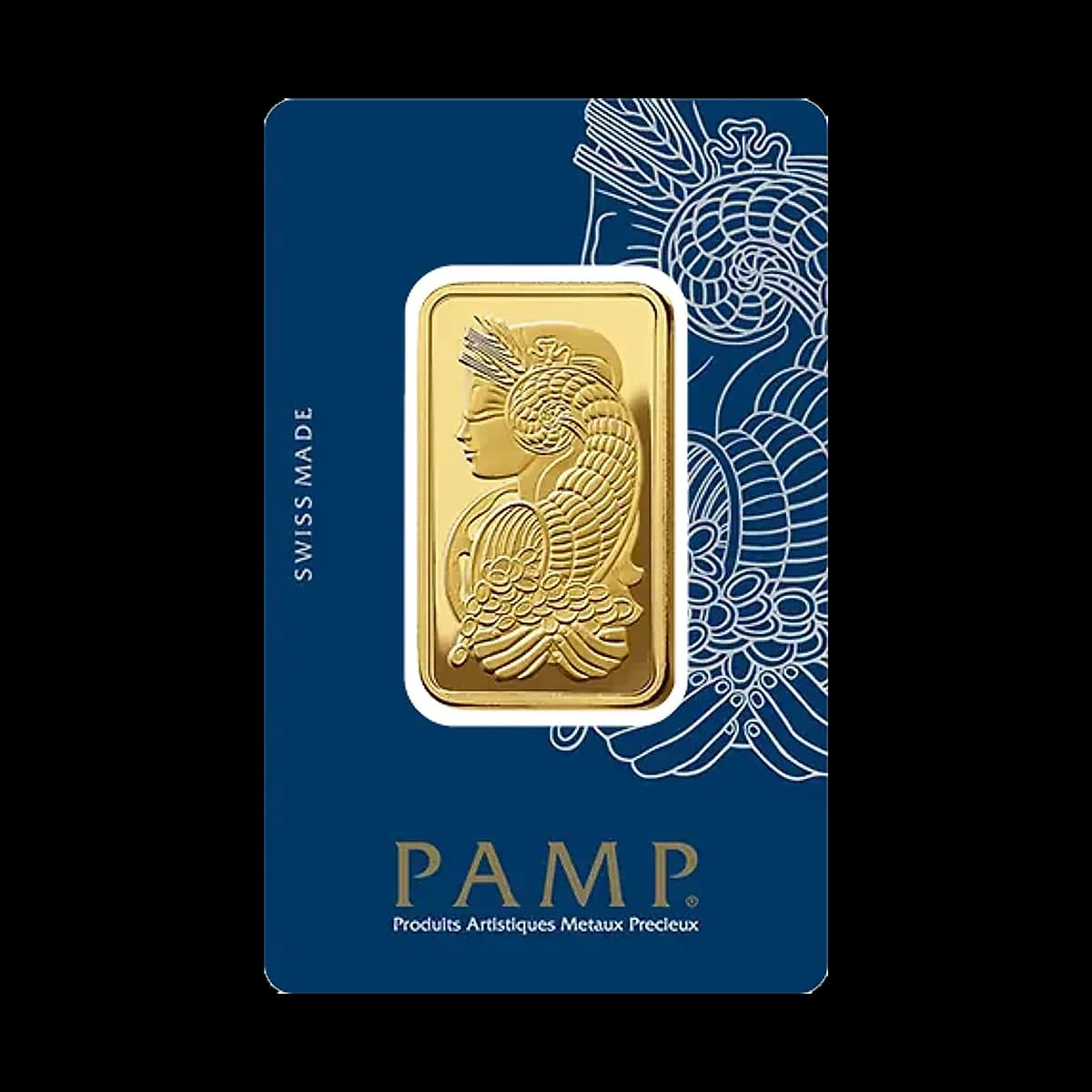
A recognised bullion bar is the easy case. Weight and fineness are stamped on it, the refiner is known, and a quick test confirms the markings. Every piece we sell has been through PMV and XRF testing, with a Veriscan check on PAMP bars. When you sell gold to us, the final amount is set at the counter after testing, at that moment's price.
Jewellery takes longer. Gemstones and enamel add weight but no gold, so they have to be allowed for. Parts of different purity need checking. And the gold will normally have to be refined before it can become anything else, a cost that shows up in what any buyer can offer. There is no trick in this. Jewellery just is not in a standard, ready-to-trade form.
Jewellery has its own value, just not the same kind
This is not a knock on jewellery. It is made to be worn, and a well-made piece carries skill and design that a plain bar never will. Many Singapore families pass down 916 gold through weddings, full-month celebrations and Lunar New Year, and for them that history counts for far more than the melt value.
The two simply do different jobs. Jewellery is for wearing, gifting and tradition. Bullion is a known quantity of gold in a form that is easy to weigh, verify and price. Plenty of households keep both.
Trouble starts when people expect one to behave like the other. Buy an ornate necklace hoping to sell it later for what you paid, and the making charge and GST will usually leave you disappointed. Buy a bar hoping for something to wear, and you will be just as let down.
Questions to ask yourself before choosing
Start with what the gold is for. A wedding gift or something to wear at Deepavali is a job for jewellery, and a bar cannot do it. If you want to hold gold by weight in a form that is simple to check, that is what bullion is made for.
Then look at the markings and the paperwork. With jewellery, check the karat stamp, the gold weight and how the making charge appears on the receipt. With bullion, check the refiner, weight and fineness on the bar, and whether the dealer is registered with the Ministry of Law under the PSPM Act. Ours is No. PS20260001016, shown on our About page and in the site footer.
Gifts are where the two meet. A small 1 g or 5 g bar in its card can be given at a birth or a wedding much as a piece of jewellery would, and it keeps the standard purity and weight of bullion.
Questions people ask
Is a 999.9 gold pendant GST-free like a gold bar?
No. The IPM exemption covers bars, ingots, wafers and qualifying coins, not jewellery. A pendant is jewellery by its form, so GST applies even at 999.9.
Why is a buyer's offer for my bangle lower than what I paid?
What you paid included the making charge and GST, while the buyer is paying only for the gold inside. Weight, purity after testing and the live gold price at that moment set the figure.
Can a gold coin with a hole drilled for a necklace still count as bullion?
Once a coin has been drilled or mounted, buyers will usually value it on its gold content alone. Whether it still meets IRAS's conditions for IPM is a question for IRAS's e-Tax guide, so check there rather than assume.
Do I need to bring my NRIC to buy gold bars?
For larger purchases above S$20,000 we take NRIC or passport details, as the PSPM Act requires of every registered dealer. Below that you can usually just walk in, though bringing it along does no harm.
Are 22 karat coins like the Krugerrand treated the same as jewellery?
Not in how they are valued: the Krugerrand and American Gold Eagle each contain a full troy ounce of pure gold and are recognised bullion coins. For GST, though, they fall below the 99.5% purity line for gold IPM. IRAS's e-Tax guide has the full rules.
You can see live prices and charts at bullionking.sg/market, or drop by the shop at Centrium Square, 320 Serangoon Road, during opening hours. If you would like to ask about a particular piece first, WhatsApp us on +65 8088 4858.
General information, not financial, tax or legal advice. For the official rules see IRAS and the Ministry of Law.
Popular gold at today's prices
 Pre-order