
Cast and minted gold bars: what actually differs
Every gold bar on our shelves is made one of two ways: poured into a mould, or struck in a press from a cut blank. The method decides how a bar looks, how it is packed and what it costs to make. It makes no difference to the gold inside. Here is how each type is made, and what that means when you are at the counter choosing between them.
- •Cast bars are poured into moulds; minted bars are struck in a press from blanks cut out of rolled gold strip.
- •Cast bars have rounded edges and a rippled surface, while minted bars are smooth, sharp-edged and usually sealed in a numbered card.
- •Minted bars generally carry a higher premium than cast bars of the same weight, because they take more steps to make.
- •Purity, weight and GST treatment are the same for both, and we test every bar either way.
How cast gold bars are made
A cast bar starts as molten gold. The refinery heats the metal until it runs, then pours a measured amount into a mould, usually made of graphite. The gold cools, shrinks a little and sets into shape. There is not much more to it than that, which is why casting is the older and simpler of the two methods.
Once cool, the bar comes out of the mould, gets cleaned and is weighed. Then the refiner's mark, the fineness, the weight and usually a serial number are stamped into the top face. Some refiners still do this by hand with punches. Others use a press.
Casting is the usual choice for bigger bars. Most 500 g and 1 kg bars are cast, and so are many 100 g and 250 g bars. The large Good Delivery bars that trade between banks in London are cast as well. Some refiners also make small cast bars for buyers who prefer the traditional look.
How minted gold bars are made
Minting takes more work. The gold is first cast into a long bar, then run through rollers again and again until it becomes a flat strip of exact, even thickness. Blanks are punched out of that strip, rather like cutting biscuits from rolled dough. Each one is weighed and trimmed until it sits within a tight tolerance.
The blanks are heated to soften them, then struck under heavy pressure between two engraved dies. One strike can put a detailed design on the front and the refiner's details on the back. Because the blank was already the right size and weight before it went into the press, the finished bar comes out uniform, with crisp edges and a smooth, often mirror-bright surface.
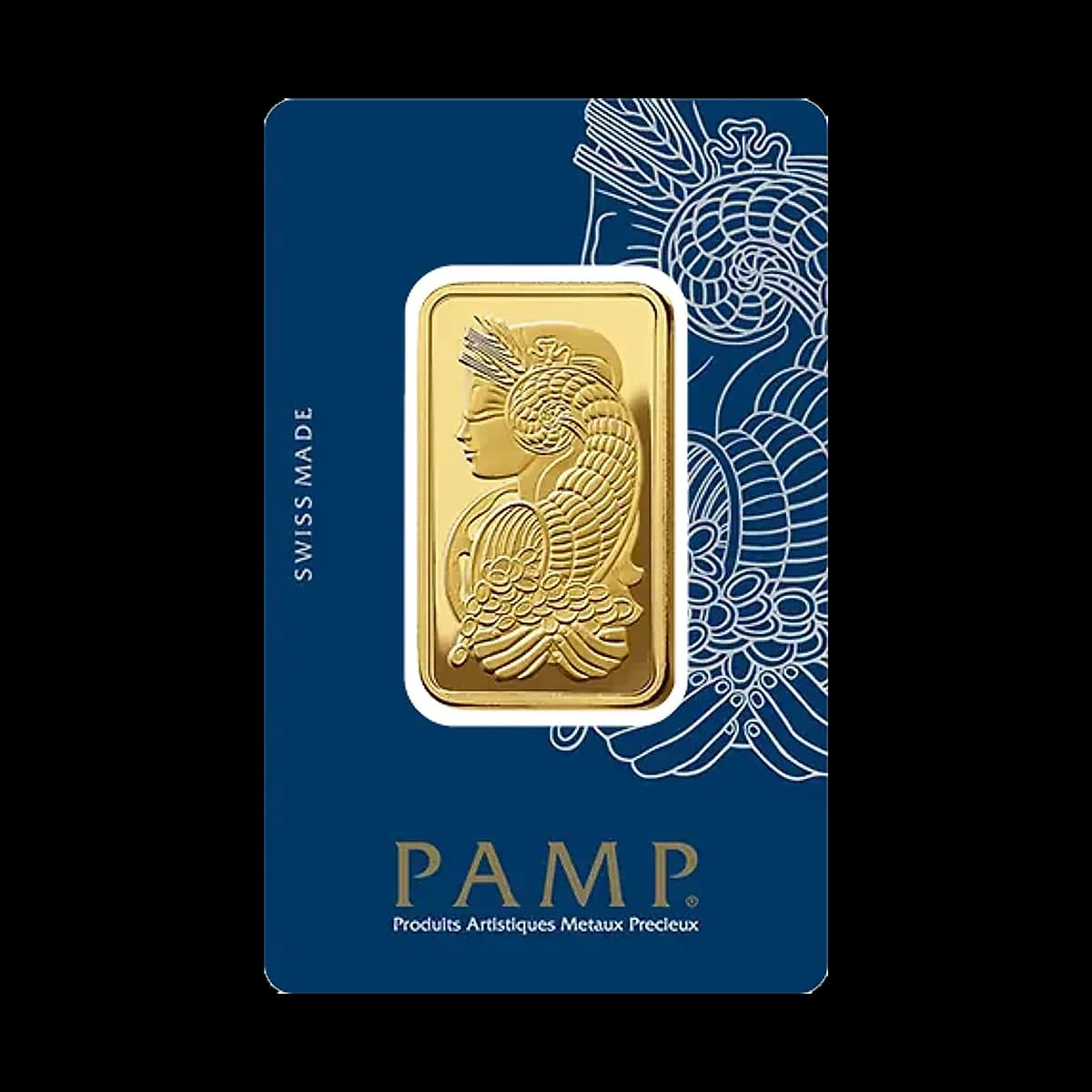
Most small bars, from 1 g up to around 100 g, are minted. The PAMP Fortuna bar, with its Lady Fortuna design, is probably the best-known example.
Telling cast and minted bars apart by eye
Put one of each side by side and you will see the difference in a few seconds. No loupe needed.
Cast bars have a bit of personality, and some customers choose them for that alone. Two cast bars of the same weight from the same refiner can look slightly different. Minted bars are close to identical, one after another.
- Surface: a cast bar has a rippled, sometimes grainy or frosted top from where the gold cooled. A minted bar is flat and polished.
- Edges: cast bars have soft, rounded edges and often sloping sides from the mould. Minted bars have sharp, square edges.
- Stamps: on a cast bar the marks can sit a little crooked or vary in depth. On a minted bar they are crisp and even.
- Design: cast bars usually carry just the basic marks on one face. Minted bars often have artwork on one side and the details on the other.
- Shape: minted bars are thinner for their weight, so a 50 g minted bar looks bigger in the hand than a chunky 50 g cast bar.
Packaging: sealed cards and loose bars
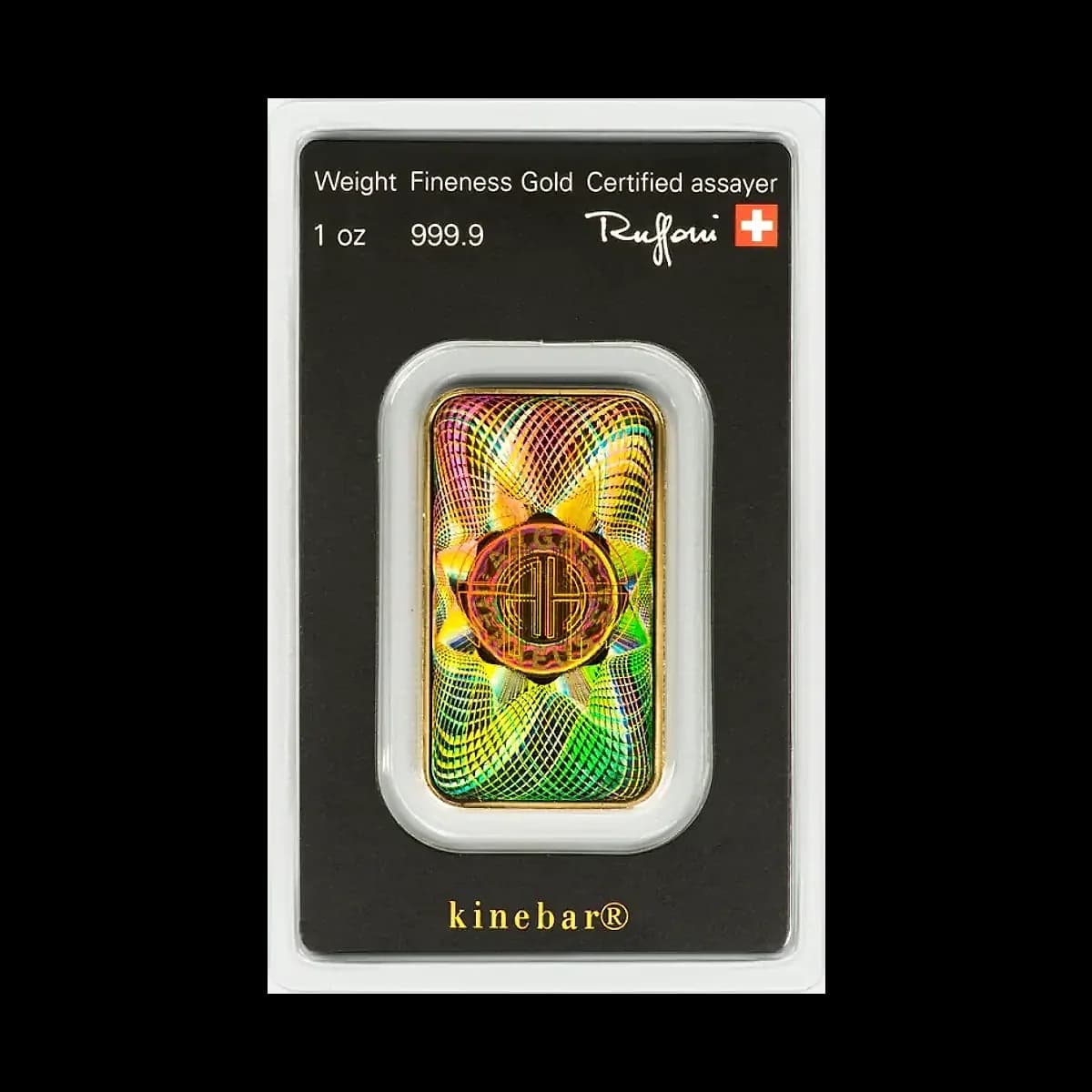
Most minted bars leave the refinery sealed in a tamper-evident plastic card, sometimes called an assay card. The card shows the brand, weight, fineness and a serial number that matches the one struck on the bar. PAMP calls its version the CertiCard. The seal keeps scratches and fingerprints off the polished surface and keeps the bar and its details together.
Cast bars more often come loose, perhaps in a simple sleeve or box, sometimes with a separate certificate. That said, some smaller cast bars are sealed in cards too, so the packaging alone will not tell you for certain how a bar was made.
If your bar comes in a card, we usually suggest leaving it sealed and keeping it somewhere dry. Singapore's humidity will not hurt pure gold, but the card keeps the bar clean and the paperwork in one place. With loose cast bars, hold them by the edges and keep any certificate alongside.
Why minted bars usually carry a higher premium
Both types are priced from the same live gold spot price, with a premium added on top. The premium covers making the bar, packing it and getting it to you. This is where cast and minted bars part ways.
A minted bar goes through rolling, blanking, annealing, striking and sealing, and each step needs its own equipment and labour. A cast bar skips most of that. So for the same weight from the same refiner, a minted bar generally costs more over spot. Size plays a part as well. Smaller bars of either kind carry a higher premium per gram than bigger ones, because the making cost is spread over less gold.
We show the premium openly on every product page, so you can put a cast and a minted bar of the same weight next to each other and compare. Premiums move, so check the live prices on our site rather than any figure you read in a guide.
Same gold either way: purity, GST and testing
How a bar is made has nothing to do with its purity. A cast 999.9 bar and a minted 999.9 bar are gold of exactly the same fineness, and 100 g of either holds 100 g of it.
Tax works the same way for both. In Singapore, gold bars of at least 99.5% purity from an accredited refiner, carrying the refiner's mark, fineness and weight, count as investment precious metals and are exempt from GST. Cast or minted makes no difference. IRAS's e-Tax guide has the full conditions.
We test every piece before it is sold, cast or minted: PMV (Precious Metal Verifier) and XRF testing, plus a Veriscan check on PAMP bars. If you later sell gold back to us, we test it again at the counter, and the final amount is set there at that moment's price.
Questions people ask
Do you buy back cast bars as well as minted ones?
Yes, we buy back both. Each piece is tested at the counter, and the amount is set at that moment's price based on the gold you bring in.
Should I open the sealed card on a minted bar?
There is no need to. The card protects the polished surface and keeps the serial number with the bar, which is handy for your own records. If a card is opened or damaged, the bar is still gold, and we test it just as we would any loose bar.
Why do two cast bars of the same weight look slightly different?
Each cast bar is poured on its own, so the cooling marks on the surface and the position of the stamps vary a little. That is normal and says nothing about the purity or weight.
Can I see both types before choosing?
Yes. Walk in to our shop at Centrium Square during opening hours, no appointment needed. If we have cast and minted bars of similar weights in stock, our staff can put them side by side for you.
You can compare cast and minted bars, with premiums shown on each product page, at bullionking.sg/shop, and follow live prices at bullionking.sg/market. If you would rather see them in person or ask something first, drop by Centrium Square or WhatsApp us on +65 8088 4858.
General information, not financial, tax or legal advice. For the official rules see IRAS and the Ministry of Law.
Popular gold at today's prices
 Pre-order