Gold bullion coins explained: Maple Leaf to Lunar
A small group of gold coins accounts for most of the bullion coins people ask us about. They come from Canada, the United States, South Africa, Britain, Austria and Australia, and they differ in purity, weight, design and how quickly a buyer knows what they are looking at. Here is what each one is, and what to check before you pick one.
- •The Eagle and Krugerrand are 22 karat, yet each 1 oz coin holds a full troy ounce of pure gold and weighs about 33.9 g.
- •Maple Leaf, Buffalo, Britannia (2013 onwards), Philharmonic, Kangaroo and Lunar coins are 999.9 gold.
- •22 karat coins fall below IRAS's 99.5% purity line for GST-exempt investment precious metals.
- •Keep coins in their capsules and don't clean them; surface marks show clearly.
999.9 coins and 22 karat coins: the difference that confuses people
Most modern bullion coins are struck in 999.9 gold, which is 24 karat. Two of the best known, the American Gold Eagle and the South African Krugerrand, are 22 karat, or 916 fineness. Customers sometimes take that to mean less gold inside. It doesn't.
The mints simply make the coin heavier. A 1 oz Eagle or Krugerrand still holds a full troy ounce of pure gold, 31.1035 grams, and the alloy is added on top: copper and a little silver in the Eagle, copper in the Krugerrand. Put one on a scale and it reads about 33.9 grams. The extra is alloy, not extra gold.
What you notice in hand is colour and toughness. The 22 karat coins have a warmer, slightly orange or reddish tone and shrug off knocks better. A 999.9 coin is a brighter yellow and softer, so it picks up marks more easily if it is handled carelessly.
The Canadian Maple Leaf, American Eagle and American Buffalo
The Gold Maple Leaf is made by the Royal Canadian Mint in 999.9 gold. One side has a single sugar maple leaf, the other the reigning monarch. Recent Maples have fine radial lines across the field and a tiny laser-marked maple leaf as a security feature, which our staff can check under magnification.
The American Gold Eagle comes from the United States Mint in 22 karat gold. The front shows Lady Liberty striding forward with a torch, adapted from Augustus Saint-Gaudens' early twentieth-century design. On the back, older coins show a family of eagles at a nest; newer ones show a close-up of an eagle's head.
The American Buffalo is the US Mint's 999.9 coin. Its design is borrowed from the old buffalo nickel, with a Native American profile on one side and an American bison on the other. It suits anyone who wants a US coin but prefers pure gold to the Eagle's alloy.
The Krugerrand, Britannia and Vienna Philharmonic
The Krugerrand was first issued in South Africa in 1967, which makes it the oldest of the modern bullion coins. It is 22 karat, and the copper gives it a noticeably reddish tone. Paul Kruger, a former South African president, is on one side and a springbok on the other. There is no face value on it, though it is legal tender in South Africa.
The Britannia is struck by the Royal Mint in the United Kingdom. Earlier Britannias were 22 karat; those dated 2013 onwards are 999.9. The reverse shows Britannia with her shield and trident, and recent issues add security details, including a small image that changes as you tilt the coin.
The Vienna Philharmonic comes from the Austrian Mint in 999.9 gold. No monarch and no animal here: one side shows orchestral instruments, the other the great organ of Vienna's Musikverein concert hall. The face value is in euros, and it is a very familiar coin in Europe.
Perth Mint Kangaroo and Lunar coins
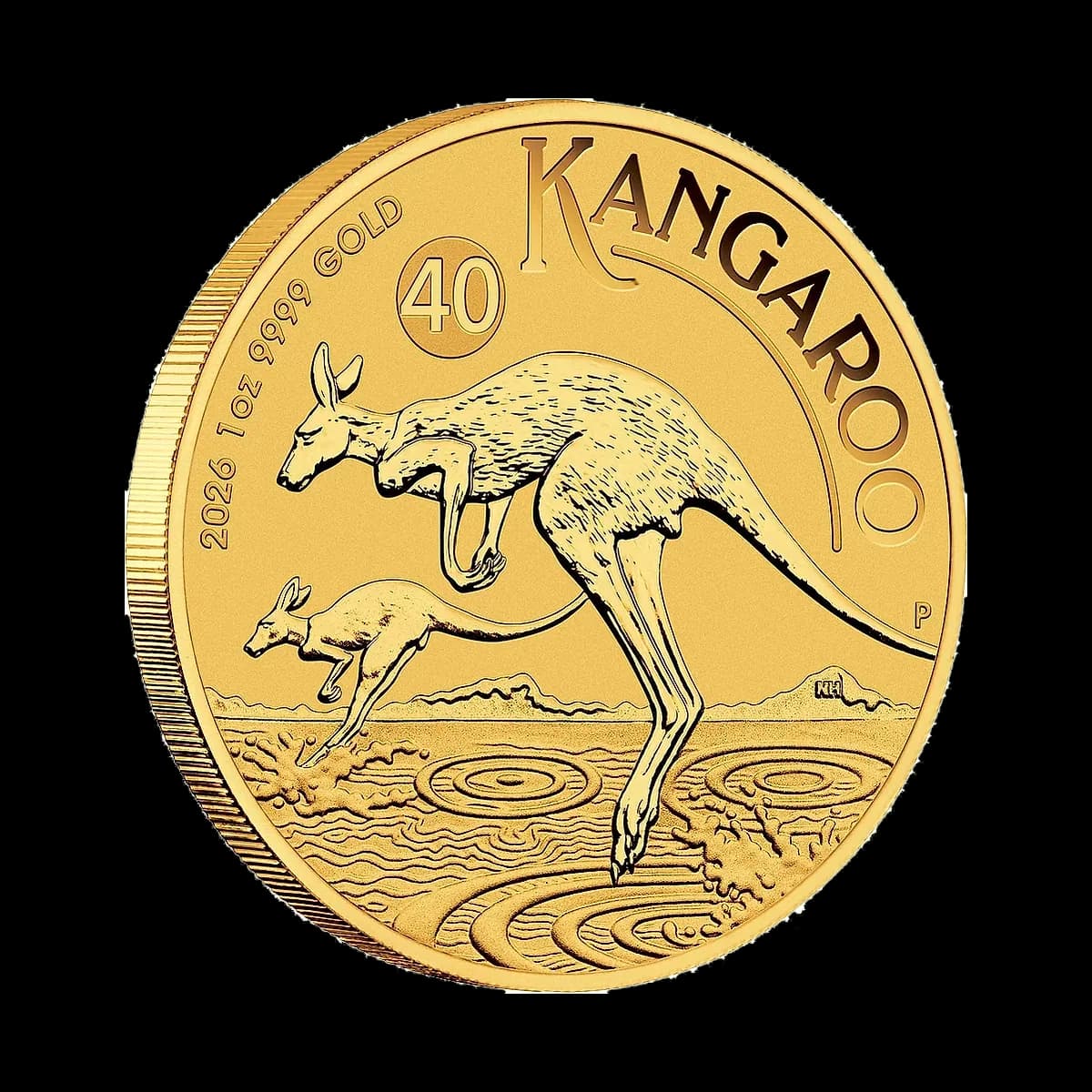
The Perth Mint in Western Australia makes two series you will see a lot of in Singapore. The Australian Kangaroo is 999.9 gold, with a kangaroo on the reverse and the monarch on the obverse. The kangaroo artwork has changed over the years, so two Kangaroos from different years can look quite different while being the same coin in substance.
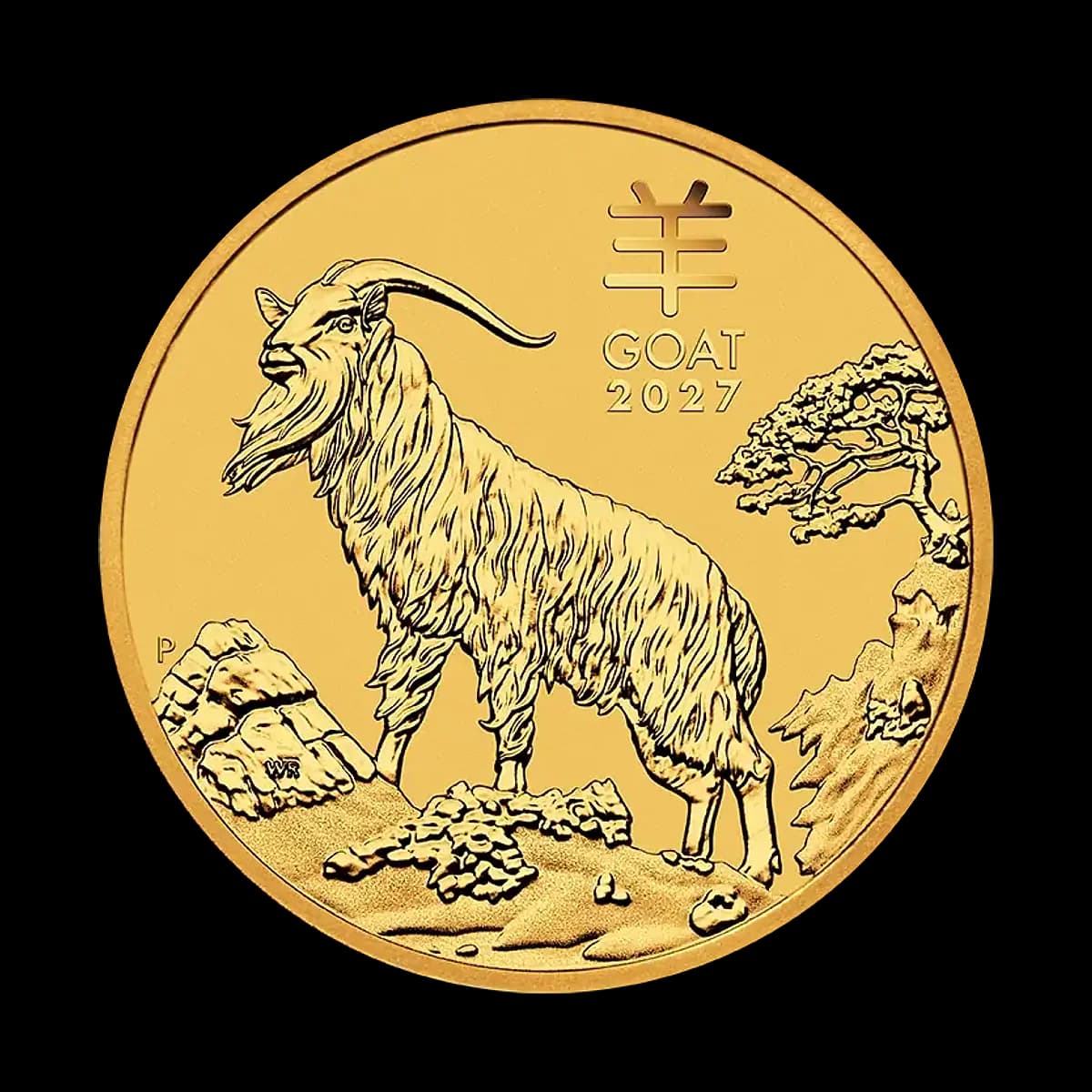
The Lunar series is the one many customers ask for by name. Each coin carries the Chinese zodiac animal of the year on its date, so a Dragon coin belongs to the Year of the Dragon. They are 999.9 gold and come in several sizes. People buy them as gifts for Chinese New Year, birthdays and weddings, and some collect the whole twelve-animal cycle.
Because the design changes every year, a Lunar coin has some collector interest on top of its gold. That can show up in the premium. Every product page lists the premium openly, so you can set a Lunar coin beside a standard coin of the same weight and see the difference for yourself.
How recognisable each coin is when you come to sell
We test every coin we buy back, whatever the brand, and the final amount is set at the counter after testing, at that moment's price. Recognition still counts, though. A coin that dealers know on sight is simpler to sell, whether to us or to anyone else. From what we see:
- Maple Leaf, American Eagle and Krugerrand: known by dealers almost everywhere.
- Britannia, Philharmonic and Buffalo: well known in the trade, with clear and published specifications.
- Kangaroo: widely recognised, especially in Asia and Australia; the year matters because the design changes.
- Lunar series: popular in Singapore and the region; further afield, buyers tend to see it simply as a 999.9 gold coin.
Practical points before you choose a coin
Condition matters more with coins than with bars. Keep them in their capsules, hold them by the edge, and never clean them, because polishing leaves fine scratches anyone can spot. Humidity won't hurt the gold, but a dry, closed box away from damp air keeps the capsules and packaging tidy.
On GST: since 1 October 2012, investment precious metals have been exempt from GST in Singapore. For gold coins, IRAS's conditions include at least 99.5% purity and legal tender status in the country of issue. The 22 karat Eagle and Krugerrand fall below that purity line, so they don't qualify as IPM on that test. IRAS's e-Tax guide on investment precious metals has the full rules.
For purchases above S$20,000 we take your NRIC or passport details, as the PSPM Act requires of every registered dealer. Our Ministry of Law registration number, PS20260001016, is on our About page and in the footer of every page.
Questions people ask
Why does my Krugerrand weigh more than my Maple Leaf?
The Krugerrand is 22 karat, so copper alloy is added on top of its full troy ounce of gold, bringing it to about 33.9 grams. The Maple Leaf is 999.9 gold and weighs about 31.1 grams. The pure gold inside each is the same.
Does the face value on a coin matter?
Not in practice. The 50 Canadian dollars on a 1 oz Maple Leaf, for example, is far below the value of the gold in it. It mainly shows the coin is legal tender where it was issued.
Will you buy back a coin that is scratched or out of its capsule?
Yes, we buy gold coins back after testing them at the counter, and the final amount is set there at that moment's price. Bring the coin as it is; please don't try to polish it first.
Which of these coins can I buy from Bullion King?
Stock changes, so the shop page is the best place to check what we have today. We carry coins from the Perth Mint and the Royal Canadian Mint among our brands, and you can WhatsApp us to ask about anything specific.
See live prices and what's in stock at bullionking.sg/shop, or walk in to our shop at #01-17 Centrium Square, 320 Serangoon Road, any day of the week with no appointment. Questions first? WhatsApp us on +65 8088 4858.
General information, not financial, tax or legal advice. For the official rules see IRAS and the Ministry of Law.
Popular gold at today's prices
 Pre-order