Silver bullion coins: Maple Leaf, Eagle, Britannia and Lunar
A handful of national mints make most of the silver bullion coins you will come across. In the standard size each holds one troy ounce of silver, but they differ in purity, design and the security features struck into the metal. Below is what to look for on each, and why a coin people know on sight is simpler to deal with when you sell.
- •A standard silver bullion coin holds 1 troy ounce, or 31.1035 grams, of fine silver.
- •The Maple Leaf is 99.99% pure; the Eagle, Philharmonic, post-2013 Britannia and Perth Mint coins are 99.9%.
- •Newer Maple Leafs and Britannias carry security marks you can check with a loupe.
- •When you sell, we test the coin at the counter and set the amount at that moment's price.
What makes a silver coin a bullion coin
A bullion coin is struck by a government mint, carries a face value and is legal tender in its country of issue. The face value is mostly symbolic. A Canadian 5 dollar Maple Leaf trades on its silver content, not on the five dollars stamped on it, and the price you pay is the silver plus a premium. We show both openly on every product page.
The standard size is 1 troy ounce, which is 31.1035 grams of fine silver. Most of these coins come in smaller and larger sizes too, but the 1 oz piece is the one dealers everywhere recognise straight away.
Purity also matters for tax here. Silver coins that are at least 99.9% pure, legal tender in their home country and meet IRAS's other conditions count as investment precious metals, which are exempt from GST in Singapore. IRAS's e-Tax guide has the full rules.
Silver Maple Leaf: Royal Canadian Mint
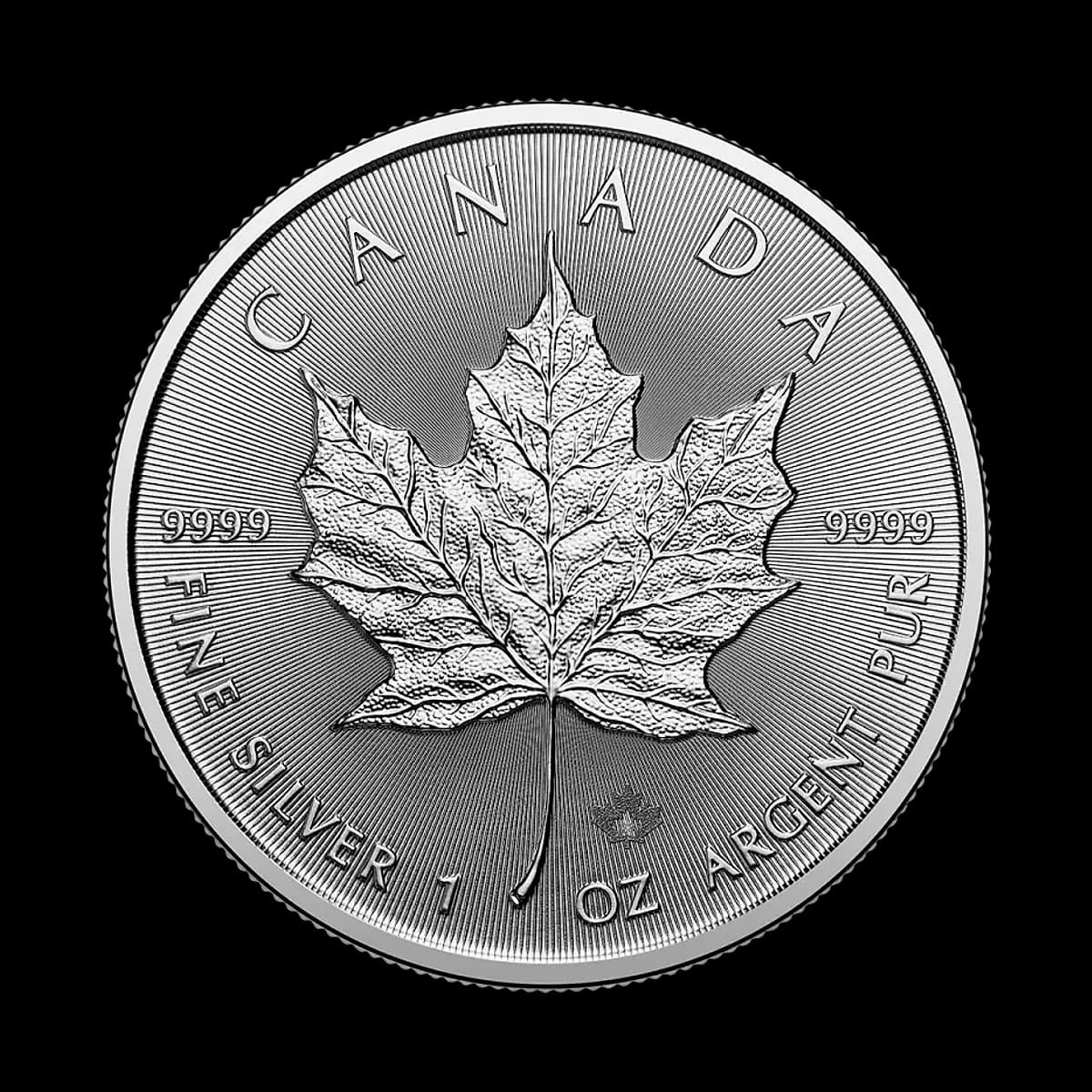
The Royal Canadian Mint strikes the Silver Maple Leaf at 99.99% purity, a touch finer than most silver coins. The reverse shows a single sugar maple leaf. On the obverse is the reigning monarch: Queen Elizabeth II for most of the coin's life, King Charles III on newer issues. Face value is 5 Canadian dollars.
This is the coin whose security features you can most easily check yourself. Since 2014 the background has been cut with fine radial lines that shimmer as you turn the coin. There is also a tiny laser-engraved maple leaf on the reverse, with the last two digits of the year inside it. You will want a loupe or a decent phone camera to read it. Both features are hard to copy cleanly, which goes a long way towards explaining why dealers trust the coin.
American Silver Eagle and the Vienna Philharmonic
The United States Mint makes the American Silver Eagle at 99.9% purity, with a face value of 1 US dollar. The obverse is Adolph Weinman's Walking Liberty, first used on the half dollar in 1916. Until 2021 the reverse carried a heraldic eagle. Partway through that year it changed to an eagle coming in to land with an oak branch. Both are genuine. Collectors call them Type 1 and Type 2.
The Vienna Philharmonic comes from the Austrian Mint, also at 99.9% silver, with a face value of 1.50 euro. One side shows the great organ in the Golden Hall of Vienna's Musikverein. The other has a cluster of orchestral instruments, including a Vienna horn, bassoon, harp, cello and violins.
Neither coin has the tilt-and-shimmer marks you see on modern Maples and Britannias. Checking one comes down to weight, dimensions, how crisp the design detail is, and proper testing. Every piece we sell has been through PMV and XRF testing first.
Silver Britannia: The Royal Mint
The Britannia is struck by The Royal Mint in the United Kingdom, with a face value of 2 pounds. Older Britannias were 95.8% silver. Since 2013 they have been 99.9%. A pre-2013 Britannia is still real silver, just a lower fineness, so it holds a little less fine silver and falls below the 99.9% line for GST exemption.
The reverse shows Britannia standing with her trident and shield, and the monarch sits on the obverse. In 2021 The Royal Mint reworked the coin and added several security features to the surface. On a newer Britannia, look for:
- A small latent image that flips between a padlock and a trident as you tilt the coin
- Fine background lines that make the surface seem to move in the light
- Micro-text too small to read without magnification
Kookaburra and Lunar series: The Perth Mint
Both of these come from The Perth Mint in Western Australia, and both change design on a regular cycle. The silver Kookaburra has been struck since 1990, with a new picture of the bird each year. Some people enjoy collecting a run of dates. The flip side is more designs to learn if you want to check a coin by eye. The 1 oz size carries a face value of 1 Australian dollar.
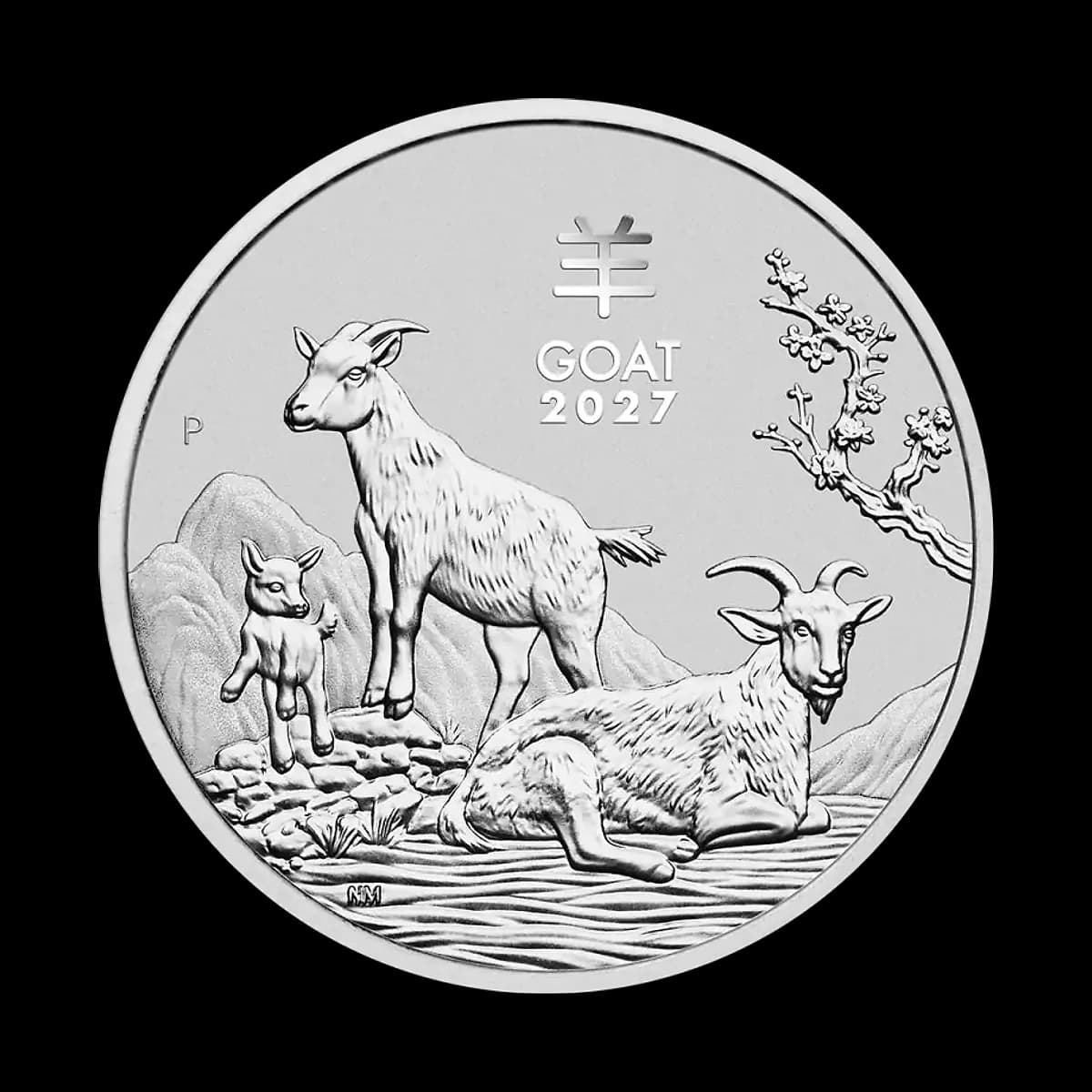
The Perth Mint's Lunar coins follow the Chinese zodiac, one animal a year. Series I began in 1999, Series II in 2008 and Series III in 2020. Plenty of customers here buy them around Chinese New Year, or as a present for a child's birth year. The Royal Mint has its own lunar range, so check which mint's coin you are looking at.
Because the designs keep changing, these coins sit somewhere between plain bullion and collectable. When you sell to us, the silver content is what we price. The year and series may matter to a collector, but not to the silver itself.
Why recognisability matters when you sell
A coin every dealer knows on sight is quicker to check. Maple Leafs, Eagles, Britannias and Philharmonics are familiar to bullion dealers around the world, and their weights and dimensions are published. That makes testing at our counter straightforward. We test the coin, then set the final amount at that moment's price.
Condition counts for less than with collectable coins, but it still helps to look after them. Silver can pick up white marks known as milk spots, and our humid weather speeds up tarnish. Keep coins in their original capsules or mint tubes, hold them by the edges and store them somewhere dry. Tarnish does not change the silver content. A clean coin in its original packaging is simply easier for us to identify.
Questions people ask
Does the face value on a silver coin affect what it is worth?
Not in practice. The face value makes the coin legal tender, but its market value comes from the silver inside it. You can see live silver prices on our market page.
Can I check a silver coin myself at home?
You can weigh it on an accurate scale, measure the diameter and look for the security marks on Maple Leafs and newer Britannias. Those checks are useful, but they don't replace proper testing. We test every coin before we sell it, and test coins you bring in to sell at the counter.
Are older Britannias real silver?
Yes. Britannias made before 2013 are 95.8% silver rather than 99.9%, so they hold slightly less fine silver for their weight. That lower purity also means they don't qualify for the GST exemption on investment precious metals; IRAS's e-Tax guide has the details.
How should I store silver coins in Singapore's humidity?
Leave them in their capsules or sealed mint tubes, somewhere dry, away from rubber bands and damp cupboards. A sachet of silica gel in the box helps. Tarnish is cosmetic and does not change the silver content.
Live silver prices and charts are at https://bullionking.sg/market, and you can see what we have in stock, with the premium on each product page, at https://bullionking.sg/shop. If you'd like to look at coins in person, walk in to #01-17 Centrium Square, 320 Serangoon Road, or WhatsApp us on +65 8088 4858.
General information, not financial, tax or legal advice. For the official rules see IRAS and the Ministry of Law.
Popular silver at today's prices
 Pre-order