
How to read the markings on a gold bar
Most of what you need to know about a gold bar is stamped on it, if you know how to read it. That small block of text is the refiner's statement of who made the bar, what it weighs, how pure it is and which piece it is. Below we go through each marking in turn, and explain why it matters when you sell and for the GST exemption on investment precious metals.
- •The refiner's mark, weight and fineness tell you who made the bar and how much pure gold is in it.
- •The serial number links the bar to its card and the refiner's records, so check that the two match.
- •IRAS's GST exemption for bars depends on purity, an accredited refiner, and the mark, fineness and weight being on the bar.
- •A card helps, but we still test every bar before buying or selling it.
What is stamped on a typical gold bar
Pick up a bar from any well-known refiner and you will find the same basic details. The layout differs between brands, and some put part of it on the back, but the content hardly changes.
Smaller bars, roughly 1 g to 100 g, are usually minted. They are cut from a rolled strip of gold and struck like a coin, which gives sharp edges, crisp lettering and often a design on the reverse. Bigger bars are more often cast: gold poured into a mould, with the markings stamped in afterwards. A cast bar looks rougher and its edges are softer. Either way, the information on it is the same.
- The refiner's name or logo
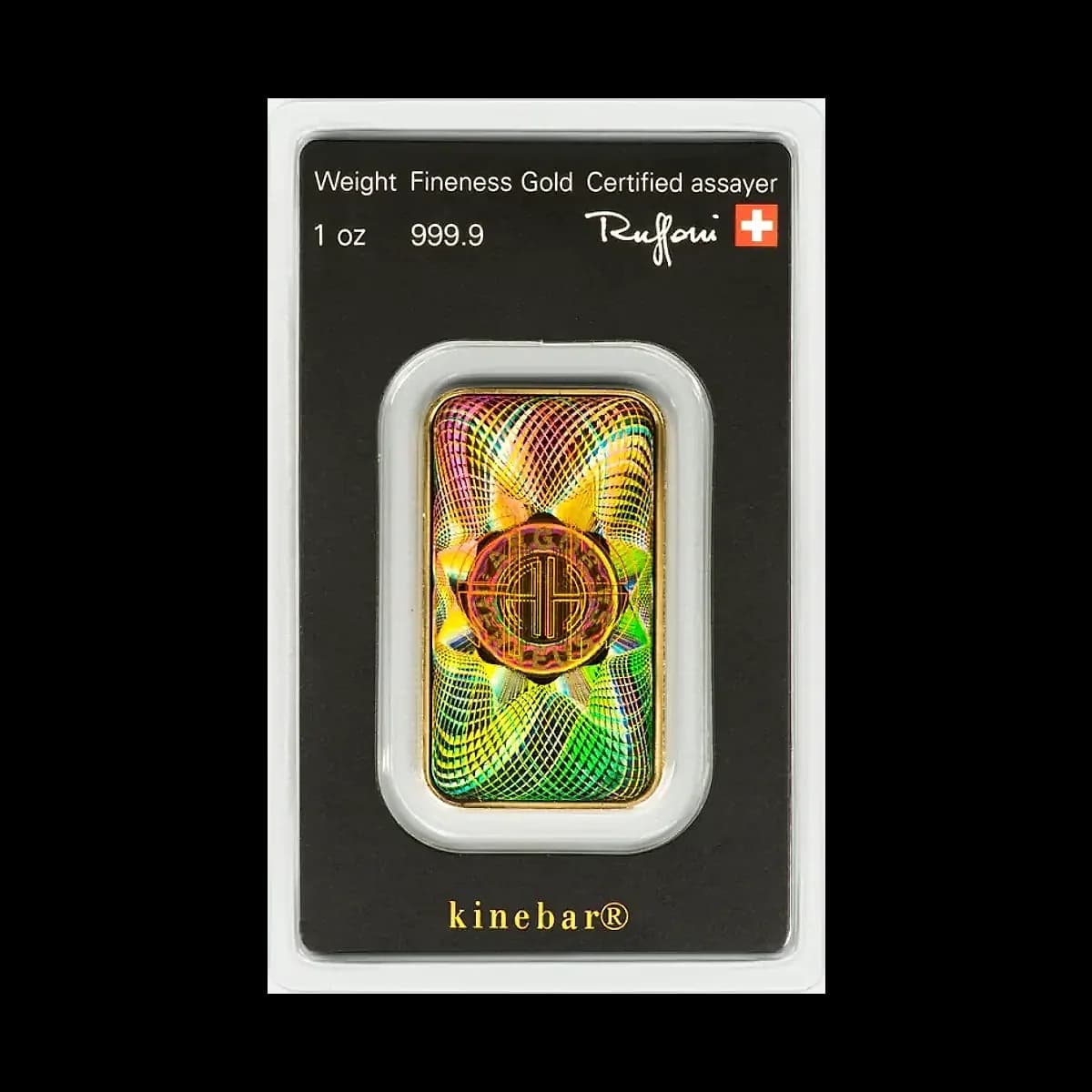
- The weight, in grams, kilograms or troy ounces
- The fineness, for example 999.9 or 999
- A serial number, on most bars
- Often the words Fine Gold, and on some brands an assayer's mark
- An assay card or certificate, either sealed with the bar or supplied separately
The refiner's mark: who stands behind the bar
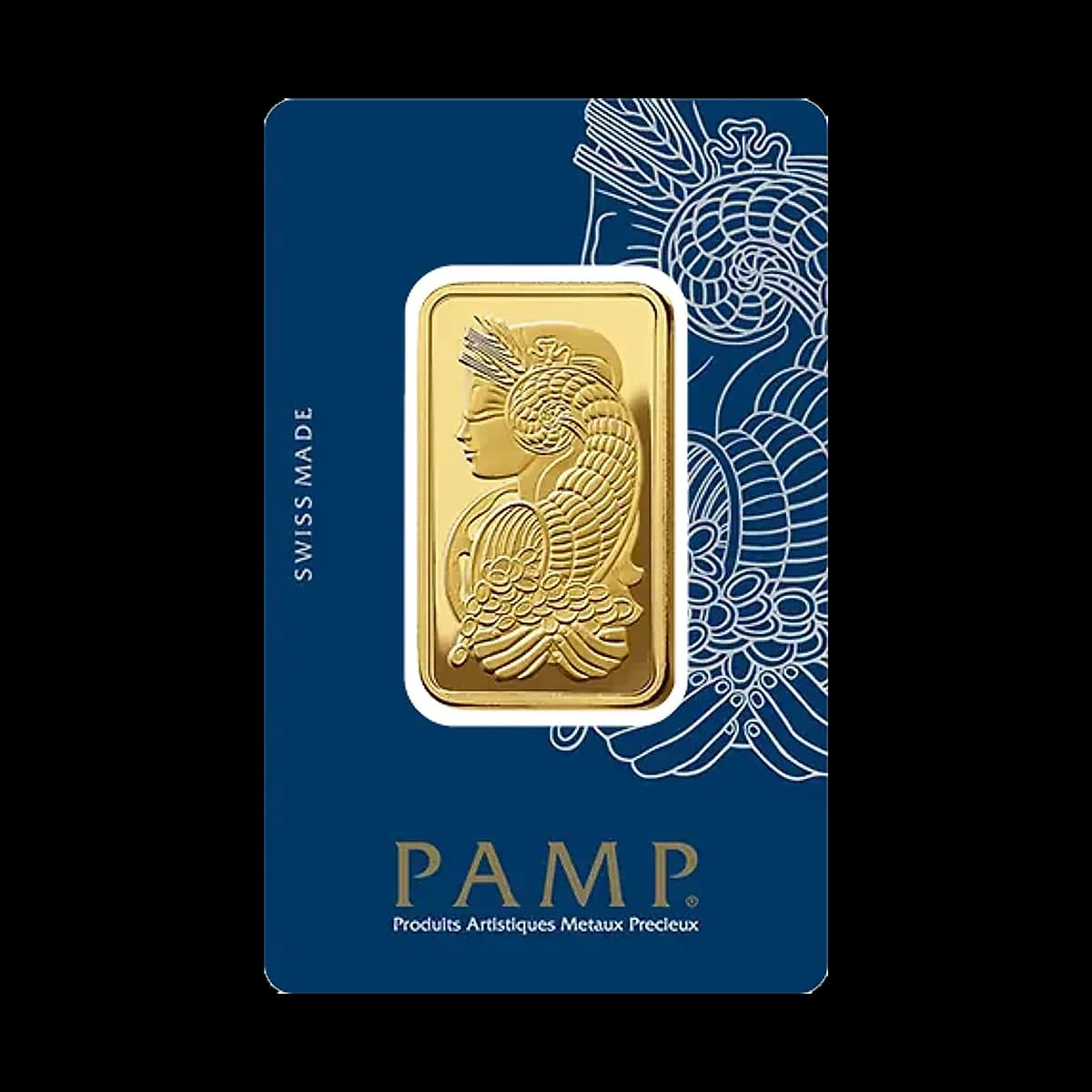
The logo or name tells you who refined the gold, and who is vouching for the weight and purity printed beside it. On the bars we sell you will see PAMP, Argor-Heraeus, Perth Mint, Royal Canadian Mint, Metalor, Heraeus, Valcambi, JBR and Nadir Metal Rafineri.
It is the first thing a dealer looks at. A bar from a refiner the market knows is easy to identify and price. One with no mark, or a mark nobody recognises, is a piece of metal claiming to be gold, and we treat it with more caution.
Many established refiners are accredited by a recognised market body. The best known is the LBMA, the London Bullion Market Association, whose Good Delivery list names refiners whose large bars the London market accepts. Accreditation also counts for GST, which we cover further down.
Weight and fineness: reading the numbers
The weight is the total weight of the bar. Metric bars are marked 1 g, 10 g, 100 g, 1 kg and so on. A bar marked 1 oz means one troy ounce, which is 31.1035 grams, heavier than the ounce in a kitchen recipe. You may also come across tola bars, a South Asian unit of 11.66 grams.
Fineness is purity, written in parts per thousand. 999.9 is 99.99% gold, often called four nines, and 999 is 99.9%. People call both 24 karat. Large Good Delivery bars can be as low as 995, or 99.5%. You won't normally see 916 on an investment bar; that is 22 karat, the usual standard for jewellery.
Multiply one by the other and you have the pure gold content. A 100 g bar at 999.9 holds 99.99 g of fine gold. That figure, rather than the outside weight, is what any buyer works from.
The serial number and why it is there
Most bars carry a unique serial number, a mix of letters and digits on the face or the back. It ties that particular bar to the refiner's production records. On carded bars, the same number is printed on the card.
The check for you is simple. The number on the bar should match the number on the card or certificate, and if it doesn't, ask why before you go any further. It also helps to keep a photo or a note of your serial numbers at home, so your own records are clear.
Some very small bars and some cast bars have no serial number at all. That isn't a fault. It just means the bar relies on its other markings and on testing.
Assay cards and certificates
Minted bars usually come sealed in a tamper-evident card, known as an assay card. It repeats the refiner, weight, fineness and serial number, and some brands add an assayer's signature. Certain cast bars come with a separate paper certificate instead.
PAMP bars have an extra feature called Veriscan, which uses the surface of each bar to match it against the refiner's records with a scanning app. We run a Veriscan check on PAMP bars on top of our usual testing.
Keep the card intact and dry. Singapore's humidity is hard on cardboard, so store carded bars away from bathroom walls and kitchen steam. A card is useful supporting evidence, but it isn't the gold, and cards can be copied. That is why we test every bar, carded or not.
How the markings tie into the GST exemption
Since 1 October 2012, investment precious metals, or IPM, have been exempt from GST in Singapore. Gold that doesn't qualify is charged GST at the standard rate, currently 9%. The markings on a bar go a long way towards deciding which side of that line it falls.
IRAS's conditions say gold bars and wafers must be at least 99.5% pure, come from a refiner accredited by a recognised market body such as the LBMA, and carry the refiner's mark, fineness and weight. So the three markings above are part of the qualifying test itself. A bar without them, or from an unaccredited refiner, may not count as IPM even if the gold inside is pure.
Jewellery, and gold below 99.5%, is not IPM. Coins have their own conditions, including being legal tender in their country of issue. For the full rules, read the IRAS e-Tax guide on investment precious metals.
What the markings mean when you sell your bar
When you bring a bar to sell to us, we read the markings first and then test. We use a PMV (Precious Metal Verifier) and XRF testing, which reads the metal's composition, plus a Veriscan check on PAMP bars. Clear markings from a known refiner make the whole thing quicker.
Scratched, bent or worn bars, or ones with damaged markings, can still be looked at, but they take more checking. The final amount is set at the counter after testing, at that moment's price, so you see the offer before you decide anything.
A little care while you own the bar pays off later. Leave it in its card or hold it by the edges, and don't clean or polish it.
- Bring the original card or certificate, if you have it
- For transactions above S$20,000, bring your NRIC or passport; the PSPM Act requires registered dealers to take identity details at that level
- Not sure about a bar? WhatsApp us a photo first
Questions people ask
Is 999.9 gold better than 999 gold?
999.9 is slightly purer, 99.99% against 99.9%, and both count as 24 karat. On a small bar the difference in gold content is tiny. A recognised refiner and clear markings make more practical difference than that last nine.
Can I sell a gold bar if I have lost the assay card?
Usually, yes. We test every bar with PMV and XRF whatever the packaging, so a bar from a recognised refiner can still be assessed without its card. The final amount is set at the counter after testing.
Why does my bar say 1 oz instead of a weight in grams?
Gold trades internationally in troy ounces, so many refiners make bars in ounce sizes. One troy ounce is 31.1035 grams, which makes a 1 oz bar slightly heavier than a 31 g bar.
Does a gold bar need a serial number to be exempt from GST?
The IRAS conditions for bars that we refer to cover purity, an accredited refiner, and the refiner's mark, fineness and weight on the bar. For the exact, current wording, check the IRAS e-Tax guide on investment precious metals.
Should I open the sealed card to look at the bar properly?
Most owners leave it sealed. The card keeps the bar clean and makes the serial number match easy to show. If you do open it, keep the card and handle the bar by the edges.
If you'd like to see these markings up close, drop by our shop at Centrium Square, 320 Serangoon Road, or check live prices at bullionking.sg/market and browse bars at bullionking.sg/shop. You can also WhatsApp us on +65 8088 4858 with a photo of a bar you're unsure about.
General information, not financial, tax or legal advice. For the official rules see IRAS and the Ministry of Law.
Popular gold at today's prices
 Pre-order