
Choosing a gold bar size: from 1 g to 1 kg
A gram of gold costs a different amount depending on the size of the bar it sits in. One kilo bar and a thousand 1 g bars hold the same metal, but they are priced differently and they behave very differently when you want to sell some of it. Here is the trade-off we explain at our counter most days, so you can pick sizes that fit your budget and your plans.
- •Bigger bars usually carry a lower premium per gram because production costs are spread over more gold.
- •Smaller bars cost more per gram but let you sell part of your gold without selling all of it.
- •Many people mix sizes to balance a lower overall premium against flexibility later.
- •Compare sizes by price per gram at the same moment, using the premium shown on each product page.
What gold bar sizes are available
Gold bars range from pieces smaller than a postage stamp up to the kilo bar, which fits in your palm but feels surprisingly heavy when you pick it up. Most refiners make a similar ladder of sizes, though not every brand makes every one, and not every size is in stock at any given time.
You may also come across regional sizes. The tola, at 11.66 g, is familiar to many families with South Asian roots, and some customers in Singapore still think in tolas when they talk about gold.
- Small: 1 g, 2.5 g, 5 g and 10 g, usually sealed in a printed assay card
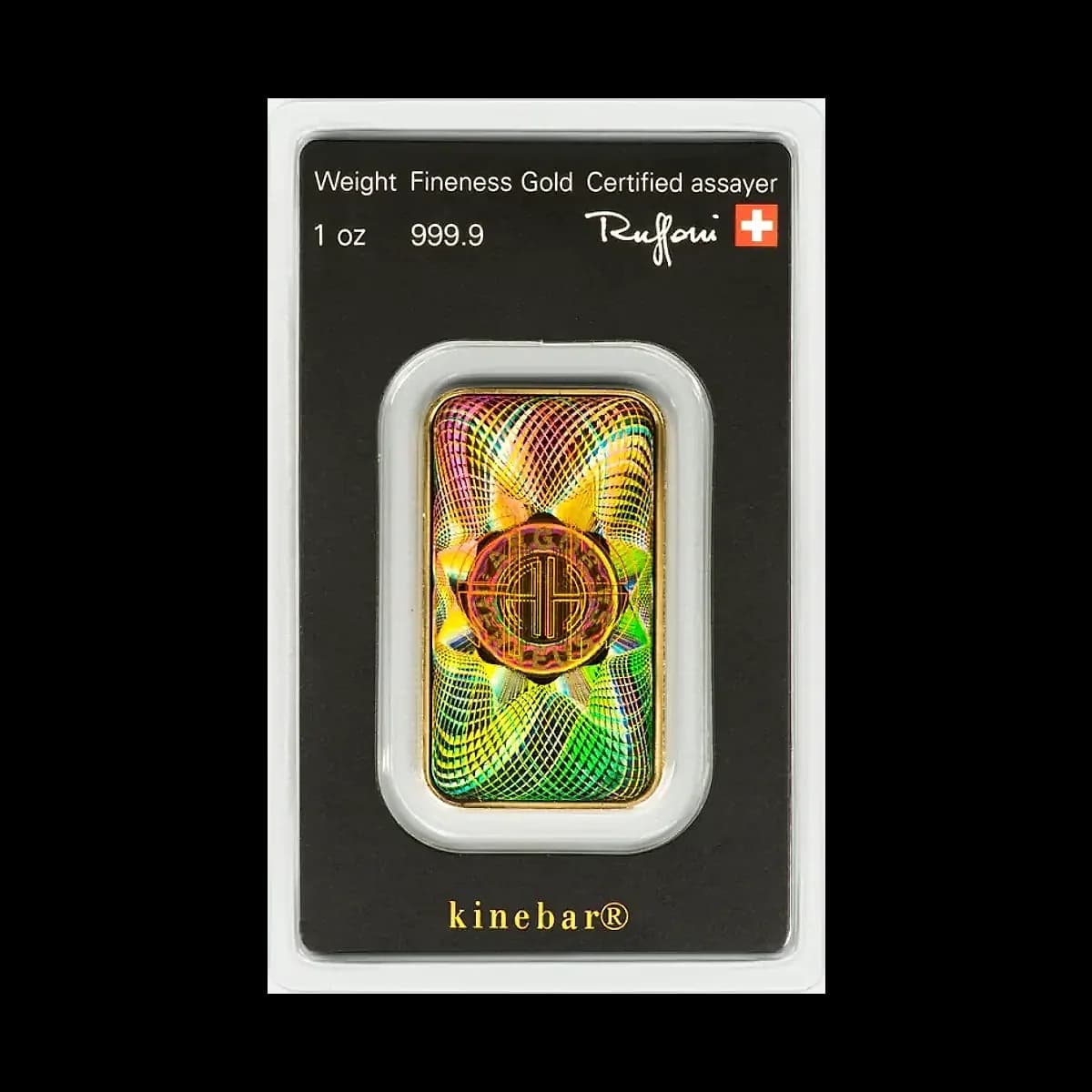
- Middle: 20 g, 1 troy ounce (31.1035 g) and 50 g
- Large: 100 g, 250 g and 500 g
- Kilo bar: 1 kg, about 32.15 troy ounces
Why the premium per gram falls as bars get bigger
Making a bar costs the refiner money on top of the gold inside it. Someone has to cast or mint it, stamp the refiner's mark, fineness, weight and serial number, package it, and ship it. A good share of that cost stays much the same whether the bar weighs 5 g or 100 g.
Spread a fixed cost over more grams and each gram carries less of it. So a 1 g bar generally costs more per gram than a 100 g bar, and the kilo bar usually carries the smallest premium per gram. The gold portion of the price follows the live world spot price in every case. What changes with size is the premium on top.
Finishing plays a part too. Small bars are usually minted, with polished faces, detailed designs and tamper-evident cards. Larger bars are often cast, poured into a mould and left with a plainer surface, which keeps their production cost down.
Selling part of your holding: the case for smaller pieces
You cannot cut a gold bar. If everything you own sits in one kilo bar and you need a portion of its value, you sell the whole bar. Hold the same weight as several 100 g bars, or a mix of sizes, and you can sell one piece and keep the rest.
People sell gold for ordinary reasons: renovating the HDB flat, school fees, a wedding, a few months between jobs. Being able to sell only what you need gives you more control over how much you turn into cash and when.
There is a catch. The gap between what you pay and what you get back per gram tends to be wider on small pieces, because the extra premium you paid on a 1 g bar is not handed back to you in full when you sell. Flexibility has a cost. When you sell to us, the final amount is set at the counter after testing, at that moment's price.
Thinking about bar size by budget
No size is right for everyone, but a few patterns come up often at our counter. Treat them as ways of thinking, not as a suggestion to buy any particular amount.
On a smaller budget, small bars or a single 1 oz bar may be the practical choice, and that is perfectly normal. Some customers add a 5 g or 10 g bar from time to time rather than wait until they can afford something bigger. You pay more per gram doing it that way, so set that against the convenience.
With more to spend, plenty of people split the amount across sizes rather than putting it all into one bar. A few larger bars keep the overall premium down, and a handful of smaller ones can be sold separately later. Where you strike the balance depends on how likely you are to need part of the money back.
- Smaller budgets: small bars or a single 1 oz bar, with a higher cost per gram
- Middle budgets: 50 g and 100 g bars, sometimes with one or two small pieces
- Larger budgets: 250 g, 500 g or 1 kg bars for a lower premium per gram, sometimes alongside 100 g bars for flexibility
- Gifts: 1 g to 10 g bars in assay cards, often given at weddings, births and Chinese New Year
Practical points before you choose
If GST matters to you, check the bar counts as an investment precious metal. In Singapore, gold bars of at least 99.5% purity, from a refiner accredited by a recognised market body such as the LBMA and stamped with the refiner's mark, fineness and weight, are exempt from GST. Ask us about any specific bar you are unsure of, and see IRAS's e-Tax guide for the full conditions.
Think about where the gold will live. Pure gold does not tarnish, even in Singapore's humidity, but assay cards can bend, scuff or warp. Keep small bars flat, dry and sealed in their cards. A kilo bar takes up very little space for its value, which is handy, though it also means a lot of value in one spot.
Bigger purchases come with paperwork. For purchases above S$20,000, we take your NRIC or passport details, as the PSPM Act requires of every registered dealer. If you plan to buy large bars or several at once, bring your ID.
How to compare sizes on our site
Every product page in our shop shows the premium openly, so you can compare like with like. The easiest check is price per gram: divide the bar's price by its weight in grams, then do the same for the other sizes you are considering. Put ten 10 g bars next to one 100 g bar this way and the difference is plain to see.
Our prices move through the day with the world spot price. At weekends, when the world market is closed, we sell at the last closing price. Compare sizes at the same moment so a move in spot does not blur the picture.
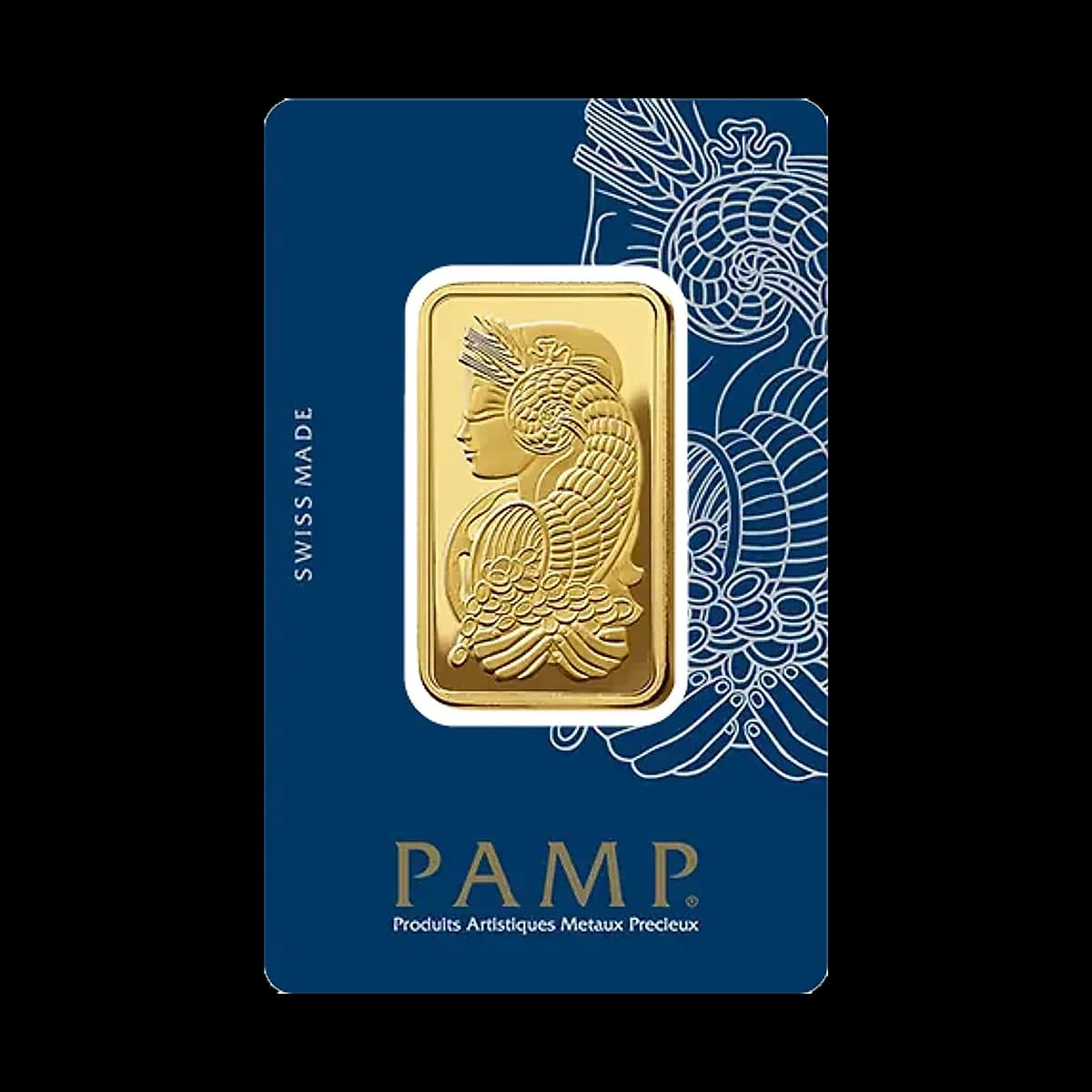
Whichever size you settle on, every piece we sell is tested first with PMV and XRF testing, and PAMP bars also get a Veriscan check.
Questions people ask
Is a 1 oz bar the same as a 31 g bar?
Not quite. A troy ounce is 31.1035 grams, so a 1 oz bar holds slightly more gold than a 31 g bar would. Use the exact weight printed on the bar when you work out price per gram.
Will you buy back small gold bars?
Yes, we buy back small and large bars. The difference is that the gap between what you paid and what you receive per gram tends to be wider on small bars, since their higher premium is not returned in full.
Do different brands of the same size cost the same?
Not always. Premiums vary by refiner and design, so two 100 g bars from different refiners can be priced differently. Each product page shows the current price so you can compare them side by side.
Can I see different bar sizes in person before deciding?
Yes. Walk into our shop at Centrium Square, 320 Serangoon Road, during opening hours, Monday to Saturday 12pm to 8pm and Sunday 2pm to 8pm. No appointment is needed, and we can show you how the sizes compare in the hand.
You can compare sizes at bullionking.sg/shop and follow live prices at bullionking.sg/market, or drop by Centrium Square to see the bars yourself. If you would rather ask first, WhatsApp us on +65 8088 4858.
General information, not financial, tax or legal advice. For the official rules see IRAS and the Ministry of Law.
Popular bullion at today's prices
 Pre-order