
Buying gold a little at a time: regular purchases explained
Some customers come in once and buy a single bar with money they have set aside. Others drop by every month or two and pick up a few grams each time. Both are ordinary ways to own gold, and neither suits everyone. Here is how each one works, what it costs you, and where the trade-offs lie, so you can make up your own mind.
- •Regular purchases spread your cost across many prices; a single purchase fixes it at one. Neither is sure to come out ahead.
- •Small pieces carry a higher premium per gram, so buying very small amounts tends to raise your overall cost.
- •Saving cash and buying larger pieces at intervals is a common middle path.
- •Gold savings plans vary widely: check ownership, fees and conversion terms before joining one.
Two ways to buy the same amount of gold
Say you plan to put a certain sum into gold over a year. You can spend it all on one day, or split it into smaller amounts and buy at intervals, perhaps on payday each month. By December you could hold a similar weight of gold either way. What changes is the price you paid along the way and the kind of pieces sitting in your drawer.
A single purchase fixes your cost at one moment's price. Regular purchases spread it across many moments. Neither tells you where the price goes next, and we can't tell you either. They are just two ways of timing your spending.
How regular buying smooths out price swings
Our prices follow the live world spot price through the day, so what you see in January won't be what you see in March. If you spend the same Singapore dollar amount each time, you get more grams when the price is lower and fewer when it is higher. Over many purchases, your average cost per gram lands somewhere in the middle of the prices you met. People call this dollar-cost averaging.
Most of the appeal is practical. You don't have to pick a day, and one badly timed purchase counts for less in your overall cost. It also fits neatly into a monthly budget, a bit like topping up a savings account.
There are limits, though. Averaging won't always beat a single purchase. If the price climbs steadily all year, the person who bought everything on day one paid less. If it slides steadily, the regular buyer came out ahead. Over a long, uneven stretch, regular buying simply means your cost reflects the whole period rather than one afternoon. It reduces timing risk. It does nothing about price risk.
The catch: premiums are higher on small pieces
Every bar or coin is sold at the value of its metal plus a premium, and we show that premium openly on each product page. The premium covers the refiner's and dealer's costs: making the piece, packaging it, shipping and handling. A lot of that cost is much the same whether the bar weighs 1 g or 100 g. So the smaller the piece, the more you pay per gram over spot.
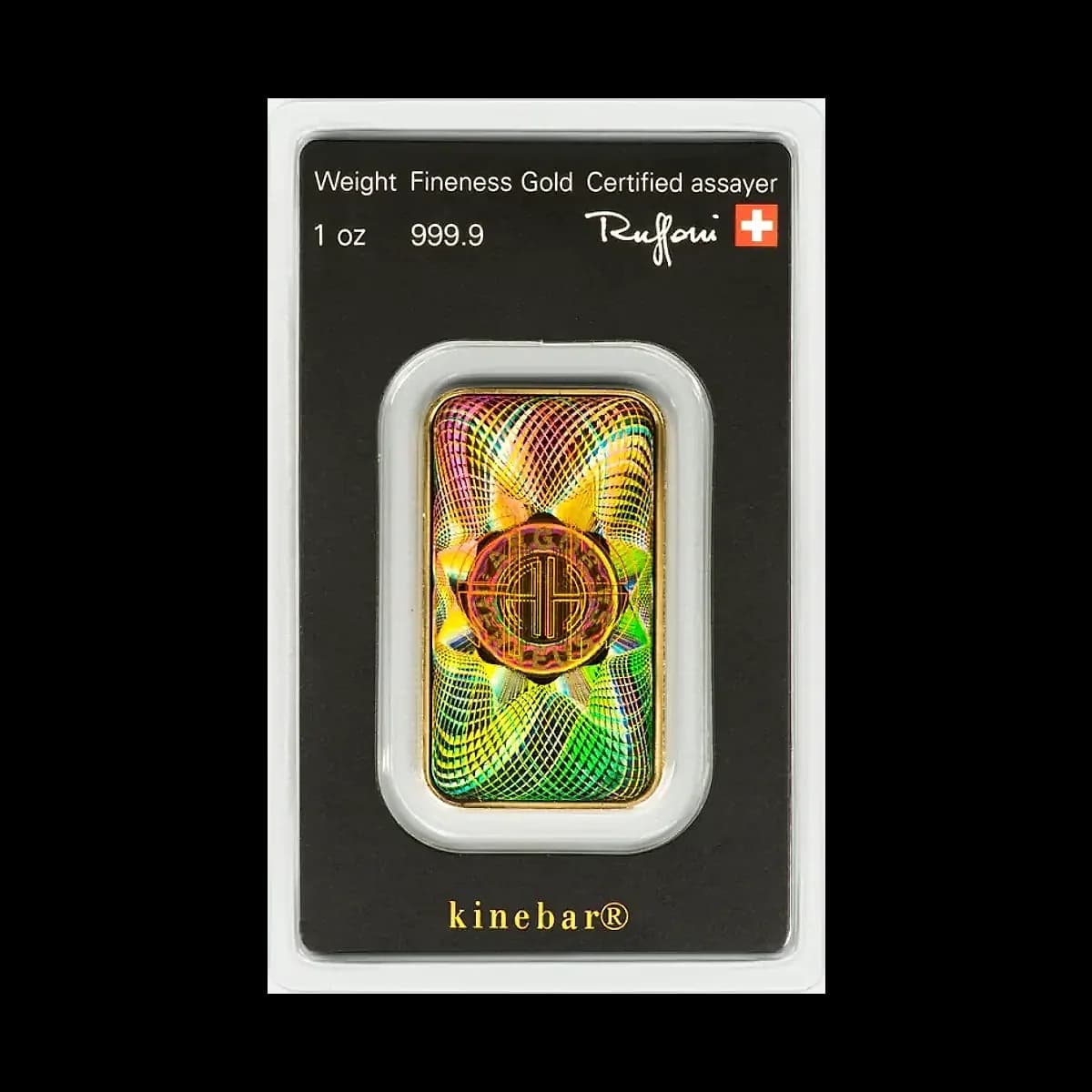
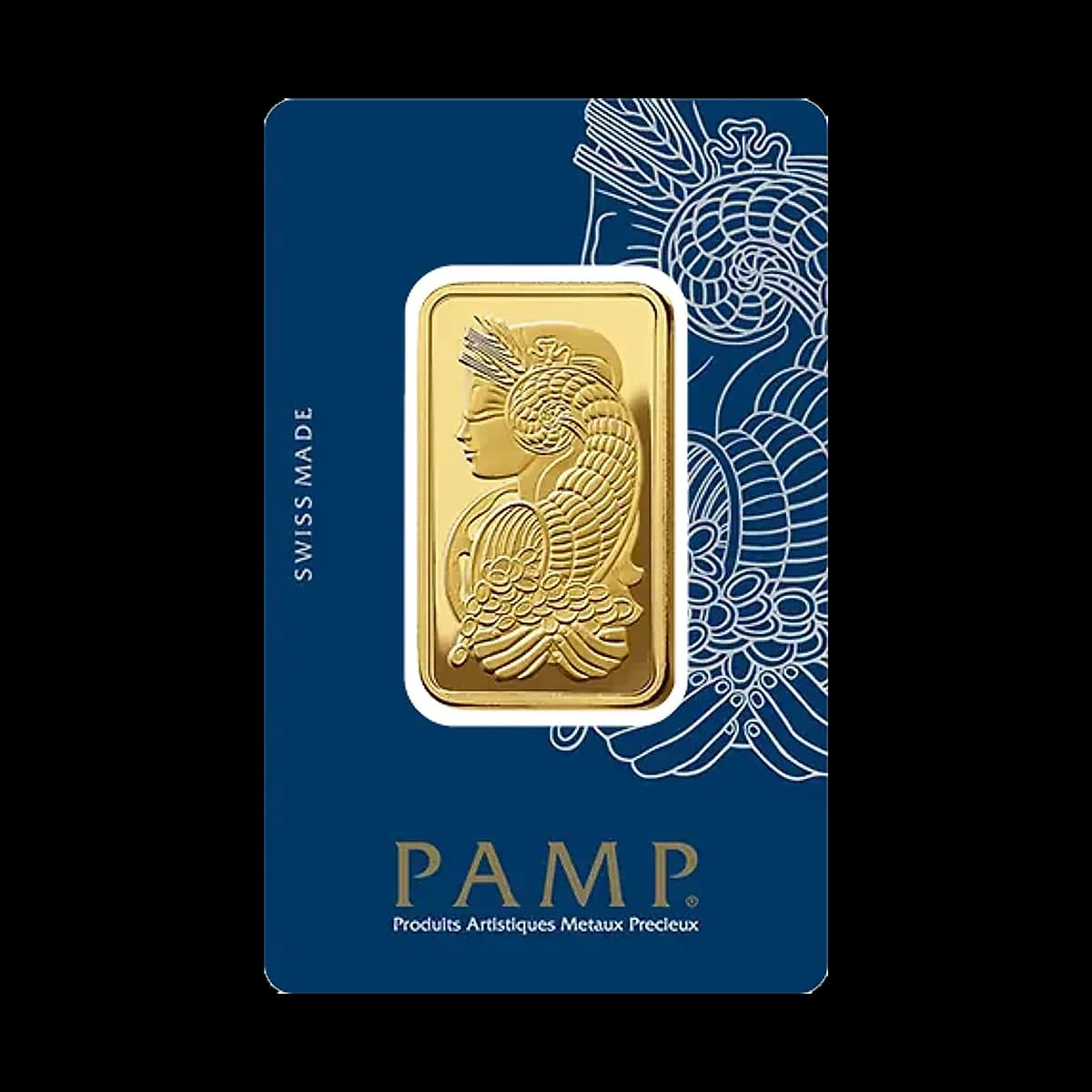
For anyone buying a little at a time, this adds up. Twelve 1 g bars bought monthly will usually cost noticeably more per gram than one bar of the same total weight, before any price movement is counted. A 1 g bar in its sealed card is a handy little thing. You pay for that convenience.
Selling works along similar lines. When we buy back, the final amount is set at the counter after testing, at that moment's price. We take small pieces and large bars alike, but the gap between what you paid and what a dealer pays back is often wider, per gram, on small items. Live prices are always on our site if you want to compare.
A middle path: save in cash, buy in steps
Plenty of regular buyers settle on a compromise. They set aside a fixed amount each month in the bank, then buy a bigger piece once the pot is large enough: a 10 g or 20 g bar, say, or a 1 oz bar or coin. Purchases still happen at intervals, so some of the averaging remains, but they avoid paying small-piece premiums every month.
The cost is fewer, lumpier purchases, so the smoothing is coarser. Some customers mix the two, with a small bar now and then for a birthday or Chinese New Year and larger bars for the bulk of what they hold. There's no formula. It comes down to your budget, how often you can get to the shop, and whether you like having something in hand each month.
Size matters again when you sell. A handful of small bars lets you sell part of your holding without parting with everything. One larger bar is easier to store and keep track of. Our staff can show you the different sizes side by side if that helps.
Gold savings plans: what they are and what to ask
Some banks and companies offer gold savings plans or gold accounts. Typically you pay in a set sum, often monthly, and the provider credits you with a weight of gold, sometimes in fractions of a gram. Some let you convert the balance into physical bars later. Others only pay out in cash. The terms differ a great deal from one product to the next, so read them carefully before signing up.
Bullion bought over the counter is yours and in your hand the moment you pay. With an account, what you own depends on the contract. Questions to put to any provider:
- Is specific gold set aside in your name, or do you hold a claim on a shared pool?
- What fees apply: account and storage fees, the spread on buying and selling, and any charge to convert to bars?
- Can you take physical gold, in which bar sizes, and how long does it take?
- What happens to your gold if the provider stops trading?
- How is the price per gram set, and how often is it updated?
Practical points when you buy regularly from us
Keep every invoice. A regular buyer can collect a dozen or more receipts a year, and a simple folder or spreadsheet listing the date, item, weight and amount paid will save you a headache later, whether you sell or pass the gold on to family.
Every piece we sell is tested first with PMV and XRF, plus a Veriscan check on PAMP bars. You can pay online by PayNow or bank transfer, or in the shop by PayNow, bank transfer, cash or card (card carries a fee). Self-collection at Centrium Square on Serangoon Road is free, which suits people passing after work. We're open Monday to Saturday 12pm to 8pm and Sunday 2pm to 8pm, no appointment needed. At weekends, when the world market is closed, we sell at the last closing price.
On GST, bars and coins that meet IRAS's conditions for investment precious metals are exempt, and the conditions are about purity, form and the refiner's marks rather than weight. So a qualifying 1 g bar is treated like a qualifying 1 kg bar. Small regular purchases will rarely come near S$20,000, but for any purchase above that, we take your NRIC or passport details, as the PSPM Act requires of every registered dealer.
Questions people ask
Is buying gold every month better than buying it all at once?
Not necessarily. Regular buying averages your cost over time, so no single day's price counts for much, but if prices rise steadily an early lump-sum purchase would have cost less. It is a way of handling timing, not a route to better returns.
What is the smallest gold bar I can buy?
Many refiners make gold bars as small as 1 g, sealed in a card. What we have in stock changes, so check our shop page for current sizes and the live price of each piece.
Do I pay GST each time I buy a small gold bar?
Gold bars and coins that meet the IPM conditions, including at least 99.5% purity and the marks of an accredited refiner, are exempt from GST whatever their weight. Jewellery and lower-purity gold are not. IRAS's e-Tax guide has the full rules.
Can I sell back only some of the gold I have bought over time?
Yes. Bring in the pieces you want to sell, and we test them and quote at that moment's price. Being able to sell part of a holding is one reason some people buy in smaller steps.
You can follow live prices at bullionking.sg/market and see each product's premium at bullionking.sg/shop. If you'd like to talk through bar sizes, drop by Centrium Square or WhatsApp us on +65 8088 4858.
General information, not financial, tax or legal advice. For the official rules see IRAS and the Ministry of Law.
Popular bullion at today's prices

 Pre-order